Concept 1 — Physical modules with AR tracking
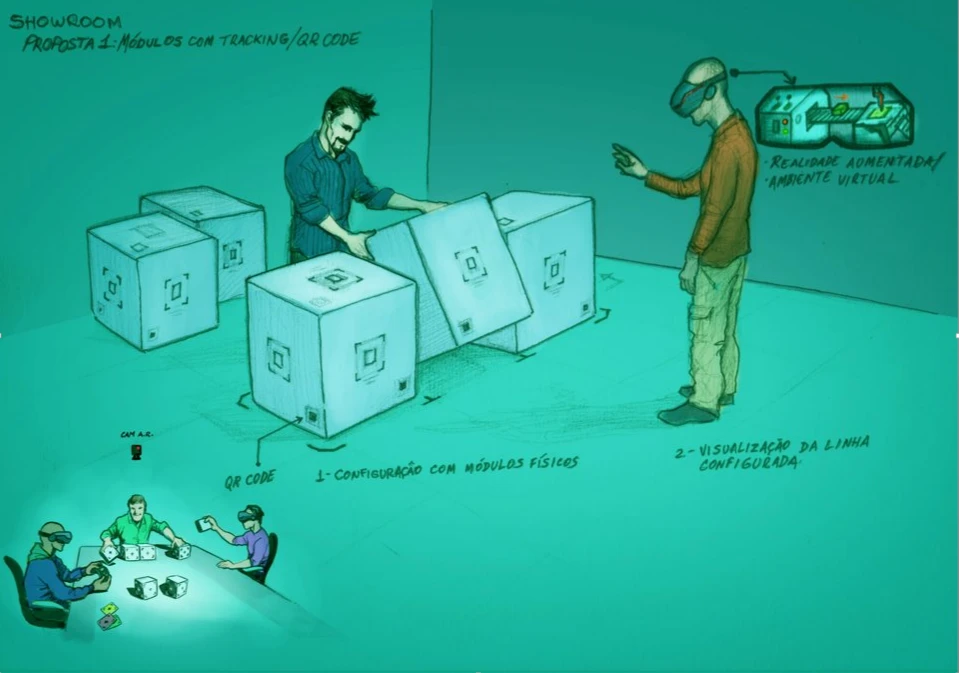
The first concept was designed for showroom contexts. A set of large physical cubes, each representing a manufacturing phase — assembly, testing, packaging — could be physically rearranged by the user to configure a production line layout.
Once configured, a person wearing an AR headset would see the virtual version of that exact line come to life: machines animated, processes running, data overlaid on each station. A tabletop version scaled the interaction down for meeting-room demos, where smaller cubes on a table triggered the same AR visualization.
The interaction logic was deliberate: the physical act of arranging cubes made the configuration feel tangible and intuitive, while the AR layer made the consequence of each arrangement immediately visible.
Concept 2 — Virtual factory model in a VR room
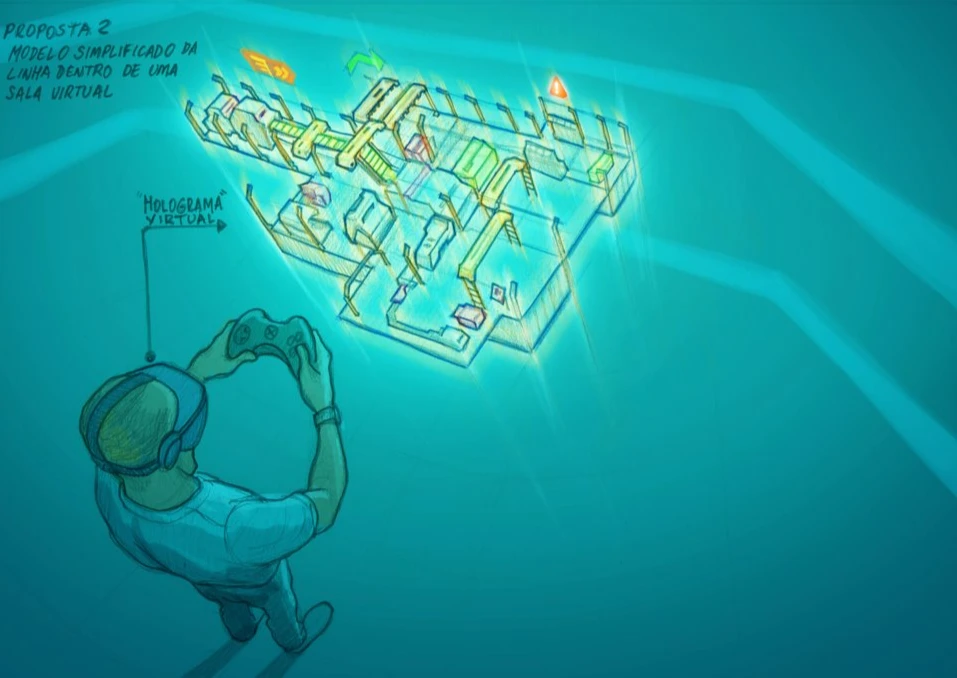
The second concept shifted the relationship: instead of configuring a line, the user observes and controls an entire factory from above. Inside a virtual room, a holographic isometric model of the full production floor floats in space — animated, live, with alerts and data visible across different areas.
Navigation was gamepad-driven: the user could rotate the model, zoom into specific zones, and access pre-configured data panels for each section. The concept was designed for remote monitoring scenarios — a manager or engineer who needs to read the state of the factory without being physically present.
The bird's-eye perspective gave spatial context that flat dashboards cannot: you could see which part of the line was running, where an alert was firing, and how that related to the rest of the operation.
Concept 3 — Immersive floor navigation in VR
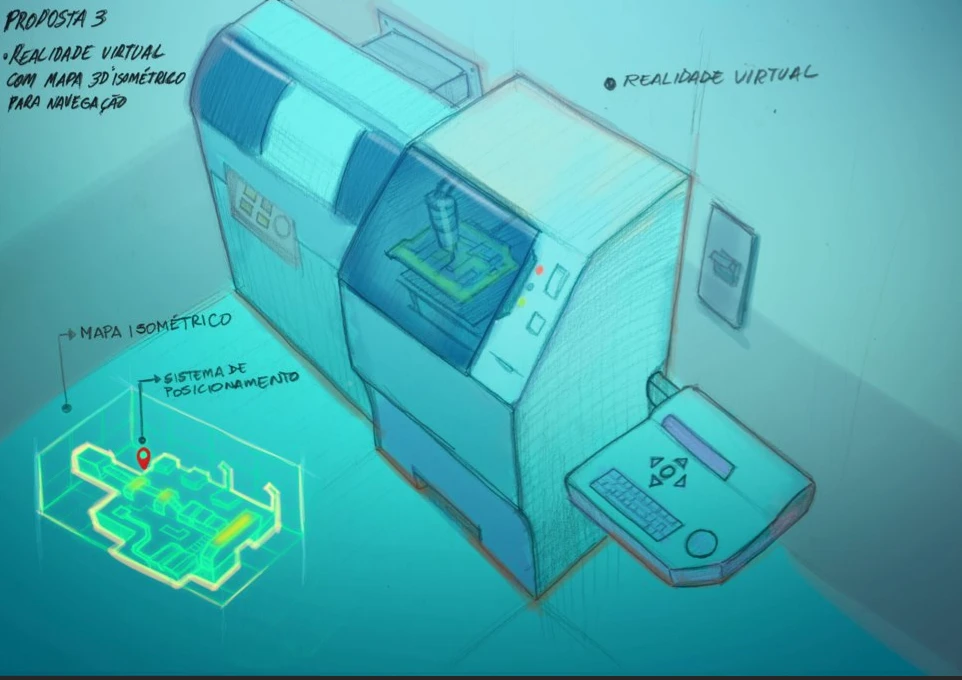
The third concept placed the user inside the factory at real scale. In full VR immersion, the operator could stand next to machines, read live data overlaid on equipment, and move through the space as if physically present on the floor.
Navigation used an isometric 3D map of the plant with a positioning system — the user could see their location within the full layout and teleport to any area directly from the map. This solved one of the real challenges of large-scale VR: getting lost in a space too big to walk through.
The concept targeted training scenarios and remote inspection — cases where physical presence is either impractical or too costly, but spatial understanding of the environment is critical.
Why this project still matters
These concepts were created in 2014 — before the Oculus Rift consumer release, before HoloLens existed, before "spatial computing" was a marketing term. They were not speculative fiction; they were interaction proposals grounded in specific user contexts and operational problems at Flex.
What the project demonstrates is not prescience about hardware — it is that the design questions were already the right ones: how do you make a factory legible from a distance? How do you let someone configure something physical and see the digital consequence immediately? How do you navigate a large industrial space without being there?
Those questions are still the ones driving spatial interface design in manufacturing today. The medium has caught up with the brief.