Day 1 — Understanding the system
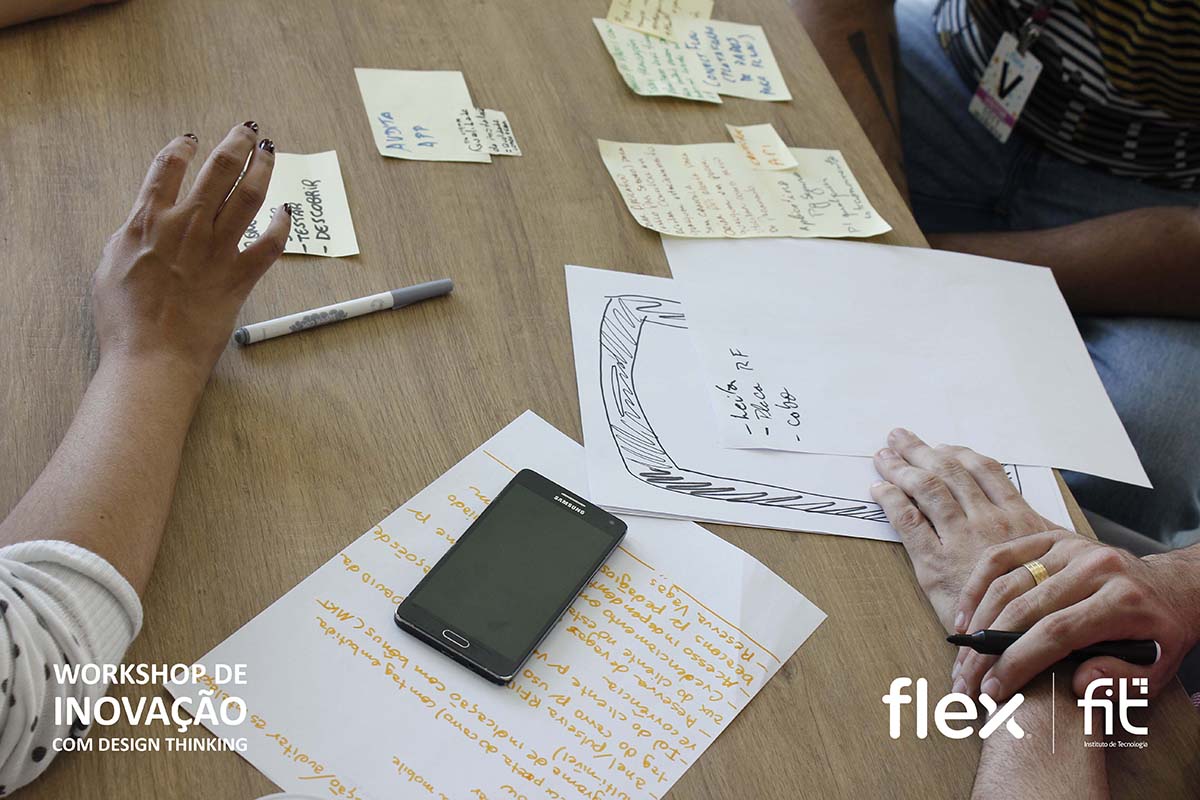
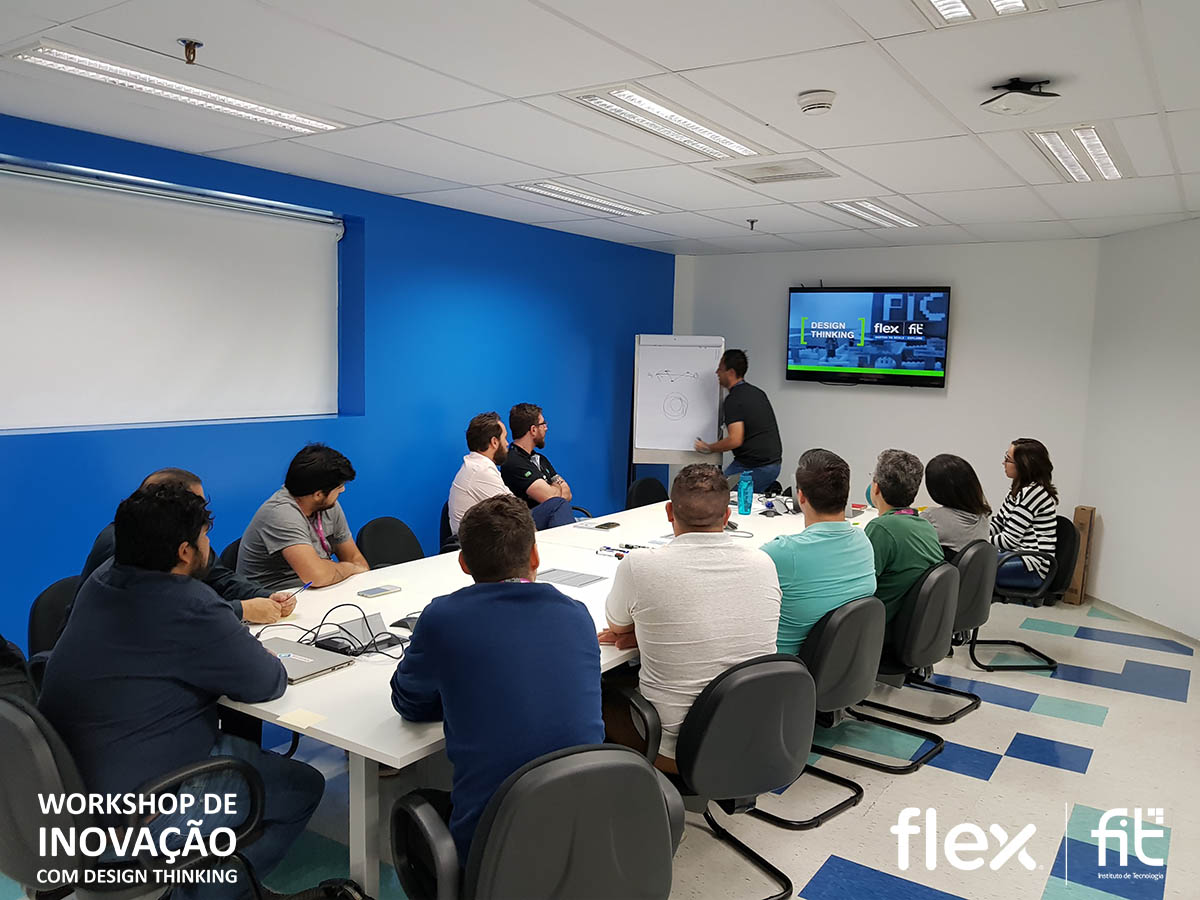
The first day was about leveling up the whole room. Lilian walked through ConectCar's current scenario while others captured key points on Post-its. This wasn't just a presentation — it was the first step in making tacit knowledge explicit and collective.
From those notes, the group built an affinity map, categorizing insights across Integrations, Market, Company, and Operational topics. Then Mário mapped the technical anatomy of the system — how the lane actually works, what communicates with what. Francisco and Lilian deepened the discussion from the business and product side.
The day closed with empathy maps for three distinct personas: the Partner (Conveniado), the Integrator, and the End Customer. Each map captured what that persona thinks and feels, sees, hears, wants, and struggles with. Joemil — an actual partner — brought firsthand insight that no internal team member could have provided.
Day 2 — Field research at Maxi Shopping Jundiaí
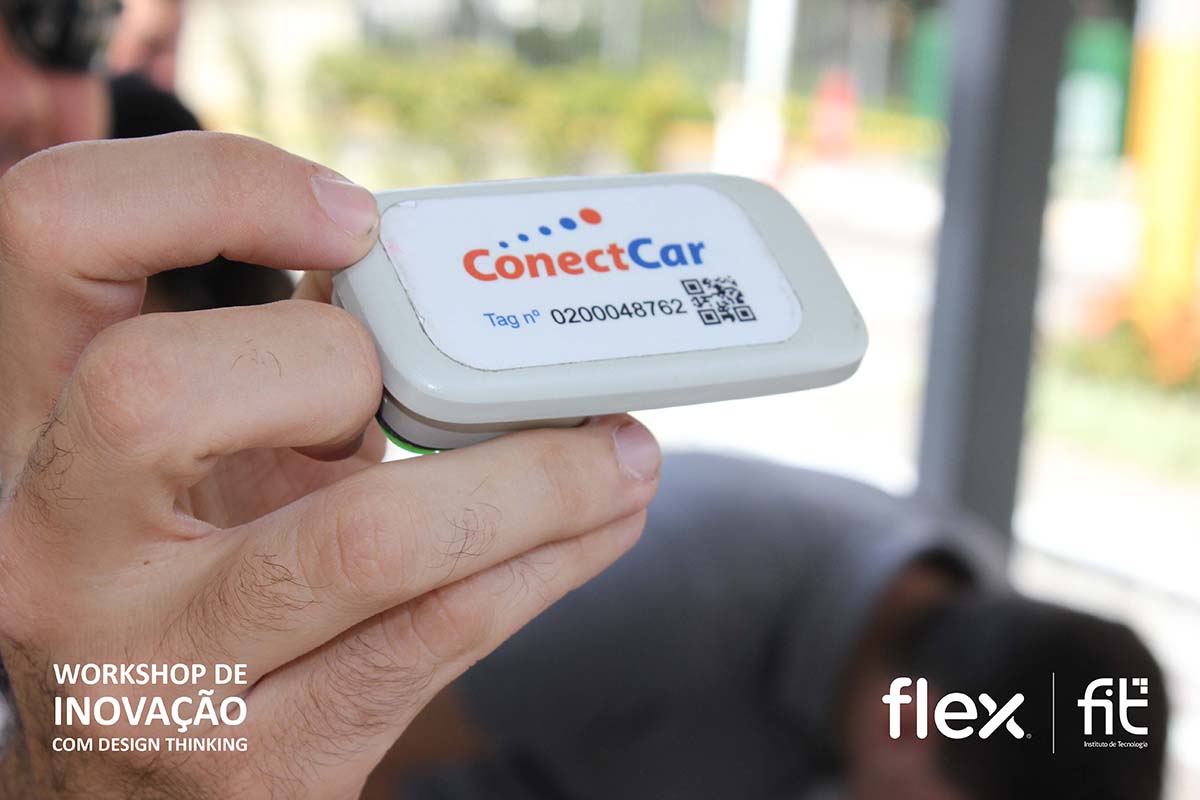
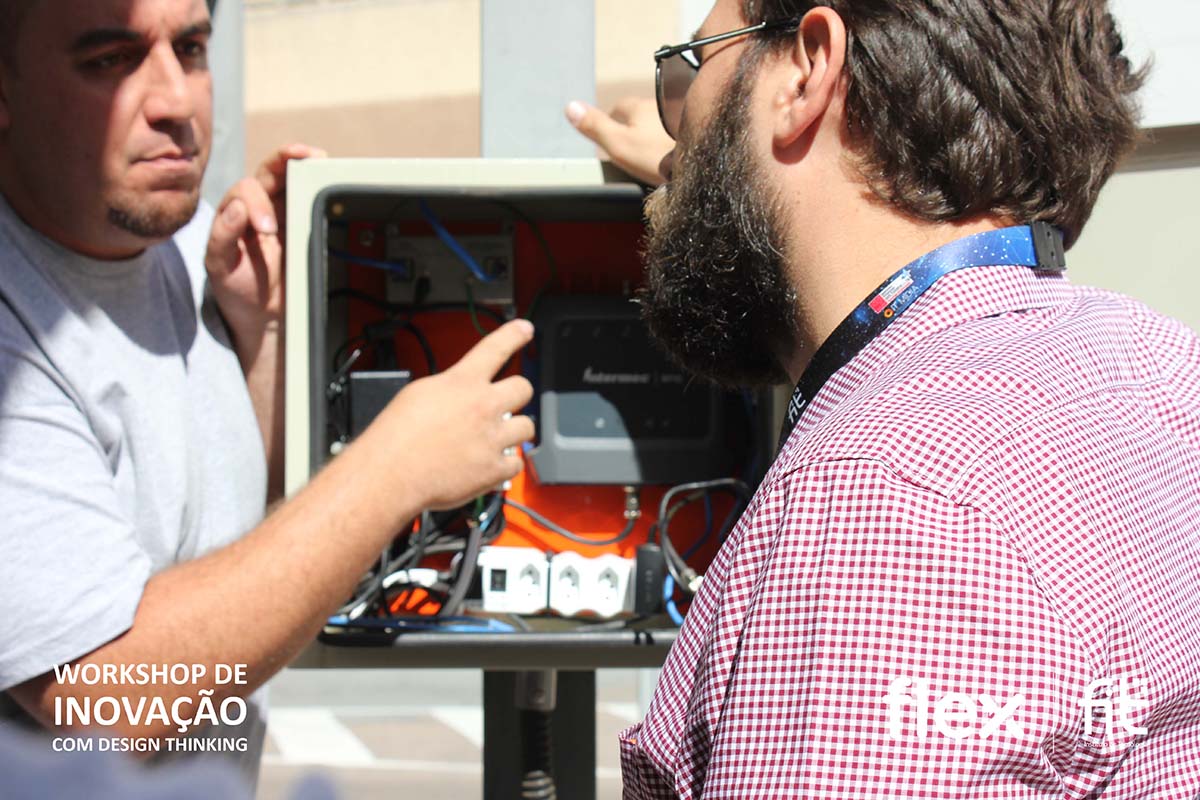
On the second day, the team left the room. The group spent the morning at Maxi Shopping Jundiaí — observing the entry and exit lanes in operation, visiting the operations and security center where ConectCar's servers ran, and watching how the security chief monitored problematic scenarios through surveillance cameras.
André, Bruno, and Lilian walked the team through how the lane actually works in practice. This wasn't theory — it was audit and discovery at the same time. Every participant was instructed to note down relevant facts throughout the visit.
Back at the table, those observations were organized into a new affinity map, grouped by themes: Mobility, Payment, Company, and Operational Excellence. The insights from the field then fed directly into the challenge definition exercise.
The team used the "How might we…" method to converge on a single shared challenge. Each person wrote their version individually, then pairs consolidated into two group challenges, which were then unified into one. The final statement — written with radical collaboration — was: "How might we optimize our acceptance network with operational and technological excellence, creating a 3I experience (Intelligent, Innovative, Invisible), including data capture and payment methods, device-independently, while valuing our relationships with clients, partners, and integrators."
Day 3 — Ideation, prioritization and prototyping
During the one-week break between Day 2 and Day 3, participants had time to think — and many did. Ideas started forming inside ConectCar with the help of colleagues not in the workshop. On Day 3, everything surfaced.
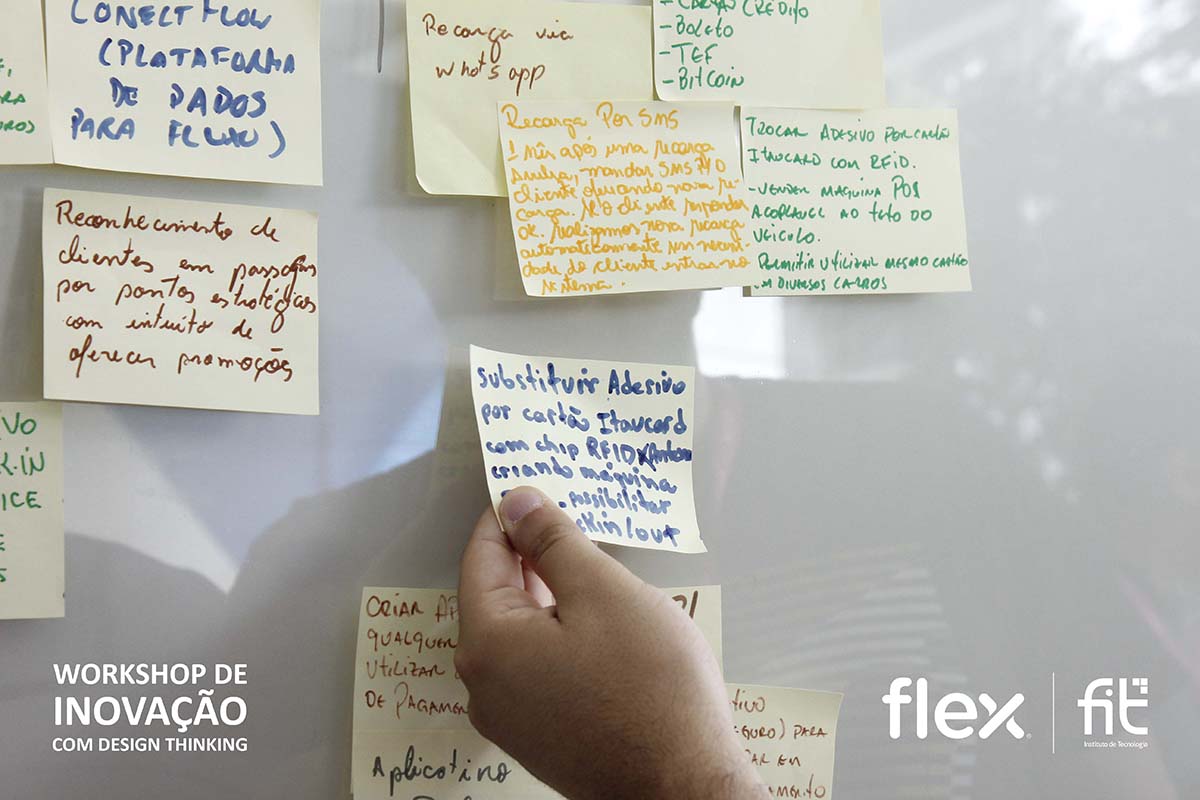
Over 50 ideas were pitched through a rotation dynamic. Each participant presented their ideas to the group for collective understanding — before any judgment. The ideas were then grouped into 5 strategic clusters: Operational Excellence, 3I Experience (Invisible, Innovative, Intelligent), Managing Data, Payment Methods, and Relationships.
After grouping, the team mapped every idea on a 2×2 Risk vs. Value matrix. Low Risk / High Value ideas moved to immediate prototyping; High Risk / High Value ideas were flagged as high-potential bets. Alternative ideas were kept visible for future exploration.
4 teams formed and chose ideas to prototype. Each team built a rapid prototype and presented it to the full group — with external observers present to give fresh feedback. The session closed with testimonials from participants on what the experience meant professionally and personally.
Workshop in action
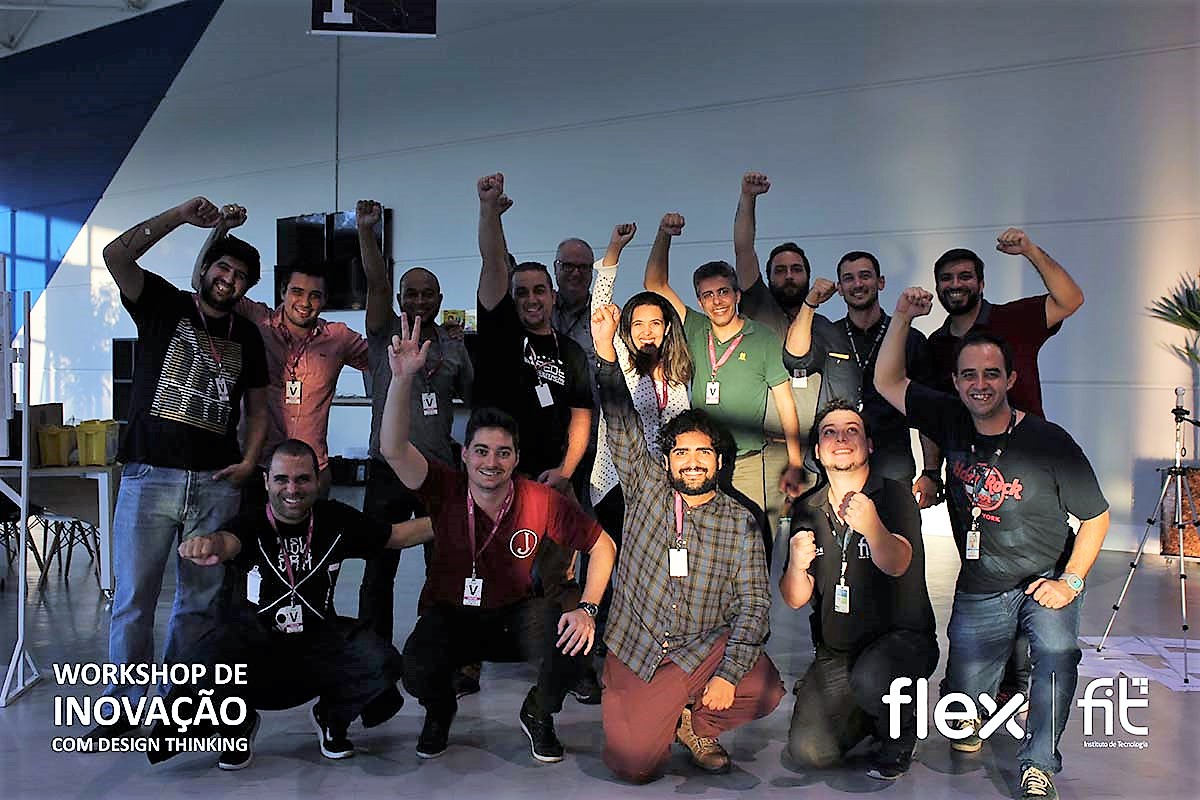
A full-room look at the three days: from the field visit at Maxi Shopping Jundiaí to the prototype presentations on Day 3.
The ideas that came out
The 52 ideas mapped across the 5 groups showed the full range of the team's thinking — from quick operational wins to bold long-term bets. The Low Risk / High Value quadrant included ideas like a ConectCar API, an open data platform (ConectFlow), a real-time transaction pipeline, an audit app for installation quality, and a PagSeguro-style app for any parking lot.
The High Risk / High Value quadrant held the bigger bets: a loyalty program, WhatsApp-based recharge, blockchain transaction processing, ConectCar for urban mobility (Zona Azul, Bilhete Único), and a full invisible-lane experience without barriers or integrators.
Beyond the ideas themselves, the most durable output was structural: a shared challenge statement, a vocabulary for talking about innovation, and a clear method for evaluating what to pursue first.